Website redesign is one of the most important investments a small business can make when its online presence no longer supports growth, trust, or conversions. A modern small business website should do more than look attractive—it should clearly communicate value, load quickly, work on mobile devices, and guide visitors toward action. Whether your current site feels outdated, performs poorly, or no longer reflects your brand, choosing the right upgrade requires more than picking a new theme and changing a few colors.
A thoughtful redesign can improve user experience, strengthen brand credibility, and increase leads or sales. But not every situation calls for the same approach. In some cases, a light refresh is enough. In others, a full website rebuild makes more sense. Understanding the difference between the two—and knowing what your business really needs—is the key to making a smart decision.
Why a website redesign matters for small businesses
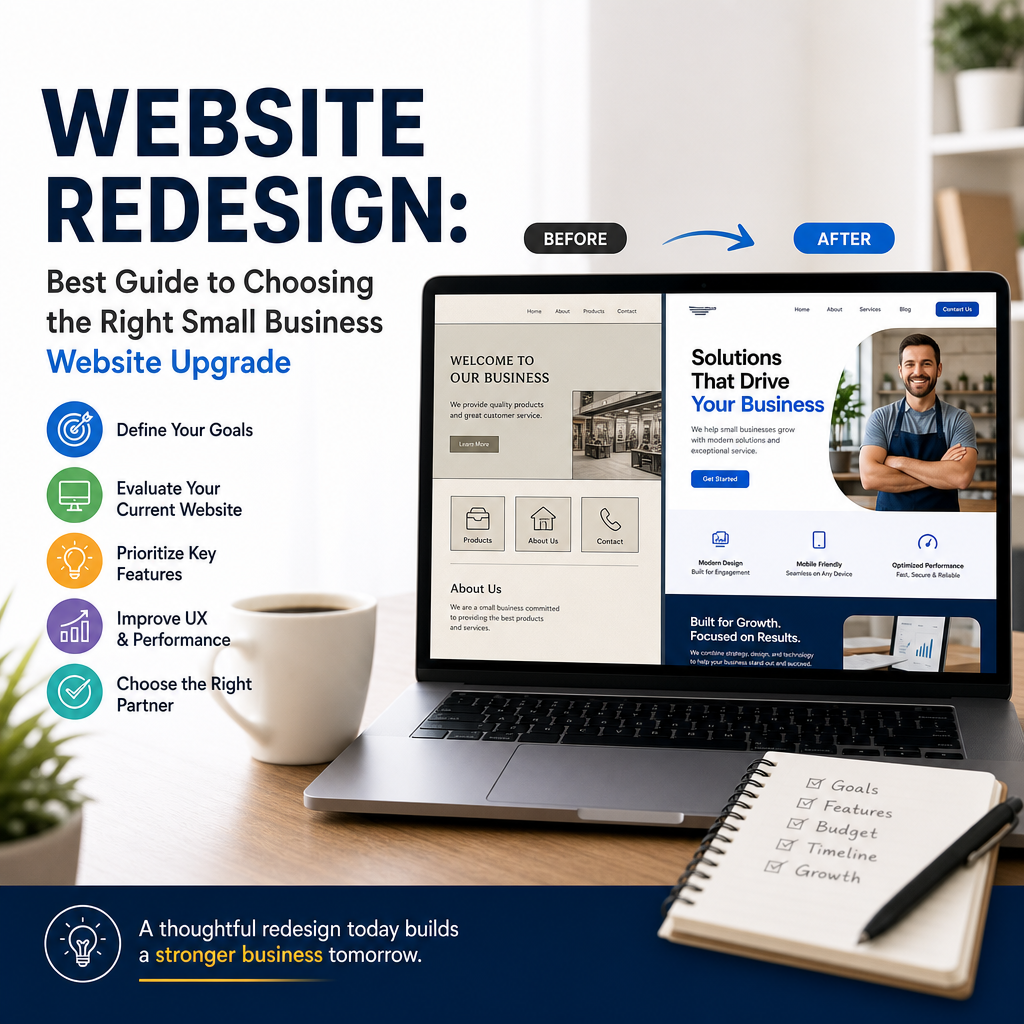
For many customers, your website is the first interaction they have with your brand. If it looks outdated, is difficult to navigate, or fails to answer basic questions, potential buyers may leave before ever contacting you. A strong small business website helps create confidence, communicate professionalism, and support your marketing efforts across search, social media, and advertising.
A redesign can solve common problems such as:
– Slow page speed
– Poor mobile usability
– Confusing navigation
– Weak calls to action
– Outdated branding
– Low search visibility
– Difficult content management
Even small improvements can make a major difference. If visitors can quickly find what they need and trust what they see, they are more likely to call, submit a form, book an appointment, or make a purchase.
Website redesign vs website rebuild: what’s the difference?
Before starting any project, it helps to understand the difference between a website redesign and a website rebuild.
A website redesign usually focuses on appearance, structure, and user experience. This may involve updating the layout, changing colors and fonts, improving mobile responsiveness, reorganizing pages, and refining content placement. In many cases, the underlying platform and core functionality remain mostly the same.
A website rebuild goes deeper. It often means recreating the site from the ground up, sometimes on a new content management system or framework. A rebuild is typically the better choice when the current site has major technical limitations, security issues, poor code quality, or outdated functionality that cannot be fixed easily.
For a small business website, the decision often depends on the current condition of the site and future business goals. If the visual design is the main issue, a redesign may be enough. If performance, scalability, or technology are holding the business back, a rebuild can provide a stronger long-term foundation.
Signs your small business website needs an upgrade
Not every website needs a full overhaul right away, but there are clear signs that your current site may be hurting your business.
Your design looks dated
A website that looks old can make a business seem less credible, even if the products or services are excellent. Design trends change, and users expect a modern experience. If your site still feels like it was built years ago, visitors may assume your business is behind the times too.
It does not work well on mobile
More users browse on phones than ever before. If your site is hard to read, scroll, or click on mobile devices, you could be losing a significant number of potential customers. A small business website must be responsive and easy to use on every screen size.
Pages load slowly
Speed matters. A slow site can frustrate users and negatively affect search engine rankings. If your pages take too long to load, visitors may leave before seeing your services or products.
The content is outdated
Businesses evolve, but websites often don’t keep up. Old promotions, outdated photos, broken links, and inaccurate service information can damage trust. Your site should reflect what your business offers today, not what it offered years ago.
Leads are not converting
If your website gets traffic but rarely generates calls, form submissions, or sales, the problem may not be traffic—it may be the user journey. A redesign can improve messaging, simplify actions, and make it easier for visitors to convert.
How to choose the right type of upgrade
Choosing between a website redesign and a website rebuild starts with a clear assessment of your current site and business needs.
Review your goals
Ask what you want your website to accomplish. Are you trying to generate more leads, increase online sales, support local visibility, or establish credibility? Your goal will shape the best upgrade path.
Assess the technical foundation
Look at the platform your site uses, how easy it is to update, and whether it supports the features you need. If the current setup is stable and flexible, a redesign may be sufficient. If it is hard to maintain or lacks modern capabilities, a rebuild may be smarter.
Consider your content and structure
Sometimes the issue is not technology but organization. If your pages are hard to navigate or your messaging is unclear, a redesign can improve the user experience without starting over completely.
Evaluate long-term growth needs
Think beyond the next few months. Will your business expand services, add online booking, publish more content, or launch e-commerce? If so, the new site should be built to support future growth.
What a successful small business website upgrade should include
A good upgrade is not just about looking better. It should improve how the site works for both users and business owners.
Clear messaging
Visitors should immediately understand who you are, what you do, and why they should choose you. Your homepage and key service pages should communicate this quickly and clearly.
Strong navigation
Simple menus and logical page structure help visitors find information without frustration. A confusing site can reduce engagement and hurt conversions.
Mobile-friendly design
Every page should display properly on smartphones and tablets. Buttons should be easy to tap, text should be readable, and forms should be simple to complete.
Better calls to action
A website should guide people toward the next step. Whether that means requesting a quote, calling your team, signing up, or making a purchase, the action should be obvious.
Search engine optimization
A redesign or rebuild is the perfect opportunity to improve SEO basics such as page titles, headings, internal links, image optimization, and local search signals.
Reliable performance and security
Your site should be fast, secure, and easy to maintain. This protects your visitors and helps your business avoid technical headaches later.
Planning your website redesign strategically
Before beginning the project, create a plan that keeps the upgrade focused and efficient.
Start by identifying the pages that matter most, such as the homepage, service pages, contact page, and high-converting landing pages. Decide what content should stay, what needs updating, and what can be removed. Gather performance data if possible, including traffic sources, bounce rates, and conversion rates. These insights can help you understand what is working and what needs improvement.
It is also wise to define your brand direction early. A redesign should align with your visual identity, tone, and customer expectations. If your business has grown or changed, your website should reflect that evolution clearly.
Common mistakes to avoid
Small businesses often make avoidable mistakes during a website upgrade. One of the biggest is focusing too much on visuals and not enough on function. A beautiful site that confuses users will not deliver results.
Another common mistake is rebuilding without a clear strategy. Starting from scratch without understanding goals, audience needs, or current performance can lead to wasted time and money.
It is also important not to overlook existing content and SEO value. If your current site has pages that rank well or bring in traffic, those assets should be preserved or carefully redirected during the transition.
Finally, do not treat a website as a one-time project. A small business website should be maintained, updated, and refined over time to stay effective.
Making the smartest upgrade decision
The best choice depends on your current site’s condition and your future business plans. If your site is structurally sound but visually outdated or difficult to use, a website redesign may be the most efficient path. If the technology is limiting performance, security, or scalability, a website rebuild could provide a better foundation for long-term success.
For small businesses, the goal is not simply to have a new-looking site. The goal is to create a website that helps the business grow. That means making decisions based on usability, performance, branding, and conversion—not design trends alone. With the right upgrade strategy, your website can become one of your most valuable business tools.